

Canning of meats is a bit daunting for some, especially beginners.
But there are people who have pioneered these preserving processes for
us, so we can use their experiences to build up our confidence in this
area. Learning these processes will allow you to have bacon and sausage
on hand, even if you don’t have a freezer.
Before starting, inspect jars for nicks and cracks. Reusing rings is
okay if they are in good shape – not dented or rusty. However, reusing
lids is not. That may lead to food poisoning, so buy new lids each time.
Wash jars, lids, and rings in soapy water. Rinse well. Boil jars, lids,
and rings in a large kettle or canning pot. Keep jars, lids, and rings
in boiling water until ready to fill.
Canning Bacon
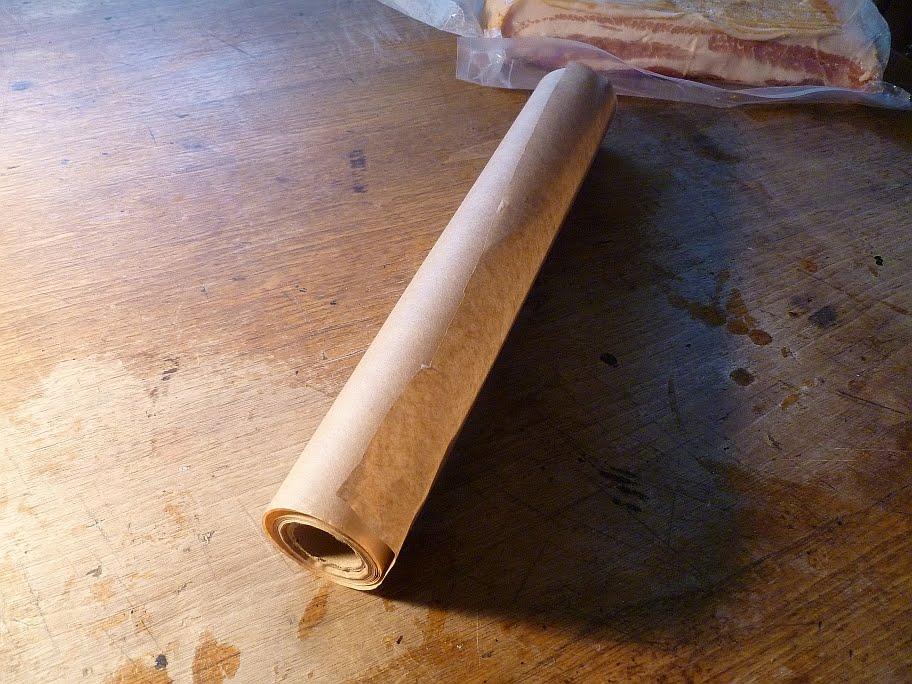
You will need plain brown paper a foot wide (you can get this from a
hardware store). You can also use butcher or parchment paper.
Canning sausage works best with freshly made sausage.
The best I could find on the net since I have not attempted it yet... I have added this here since I have been asked a lot about the details although I have done a ton of research I still have not attempted it. This serves more as a place holder and guide for now. It will be replaced in the near future with my own methods and tests.

But there are people who have pioneered these preserving processes for
us, so we can use their experiences to build up our confidence in this
area. Learning these processes will allow you to have bacon and sausage
on hand, even if you don’t have a freezer.
Before starting, inspect jars for nicks and cracks. Reusing rings is
okay if they are in good shape – not dented or rusty. However, reusing
lids is not. That may lead to food poisoning, so buy new lids each time.
Wash jars, lids, and rings in soapy water. Rinse well. Boil jars, lids,
and rings in a large kettle or canning pot. Keep jars, lids, and rings
in boiling water until ready to fill.
Canning Bacon
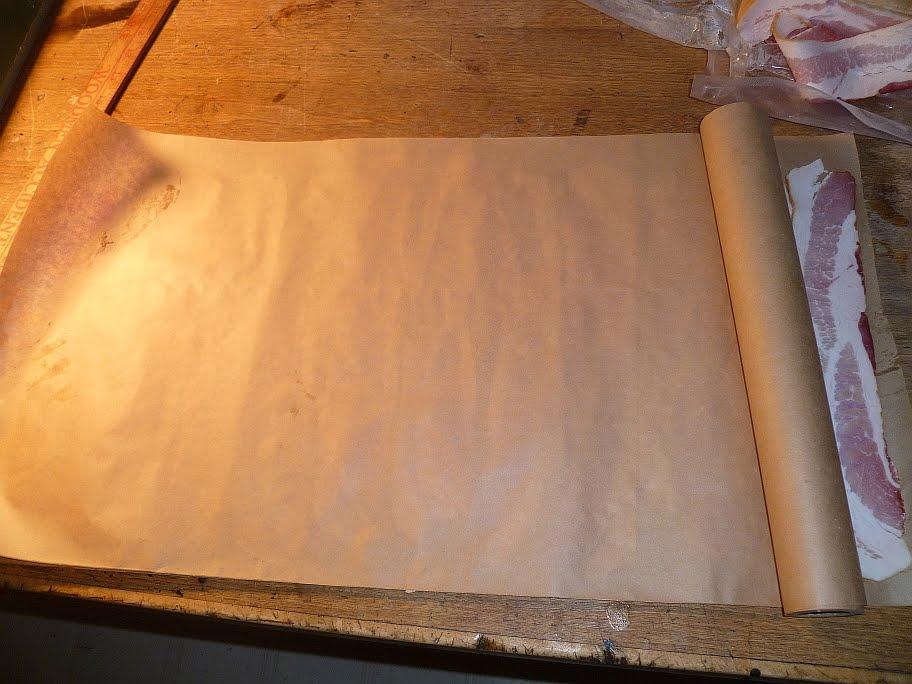
You will need plain brown paper a foot wide (you can get this from a
hardware store). You can also use butcher or parchment paper.
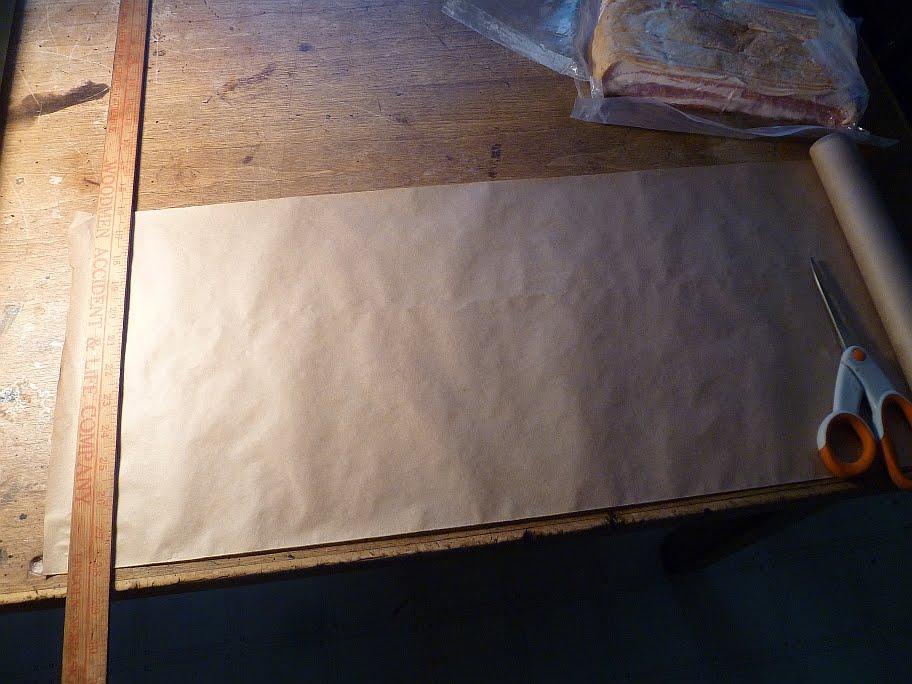
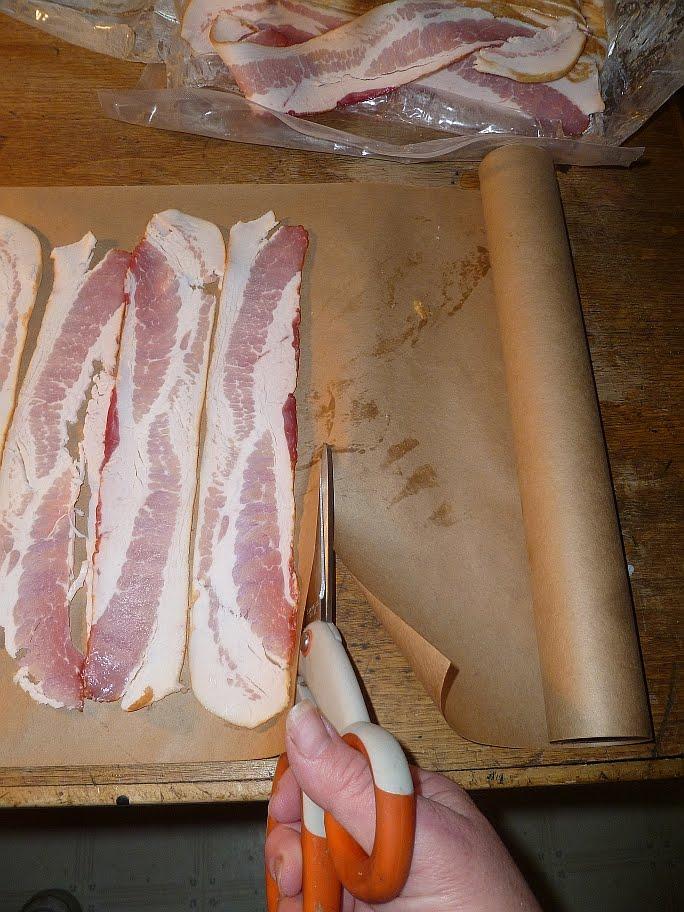
- Lay paper out on your work surface about two feet long.
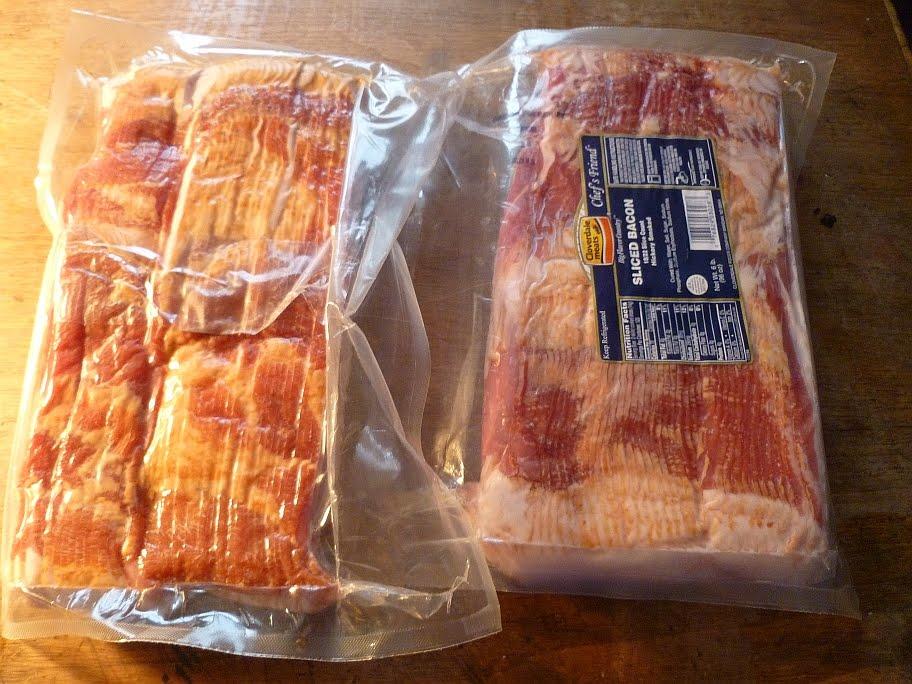
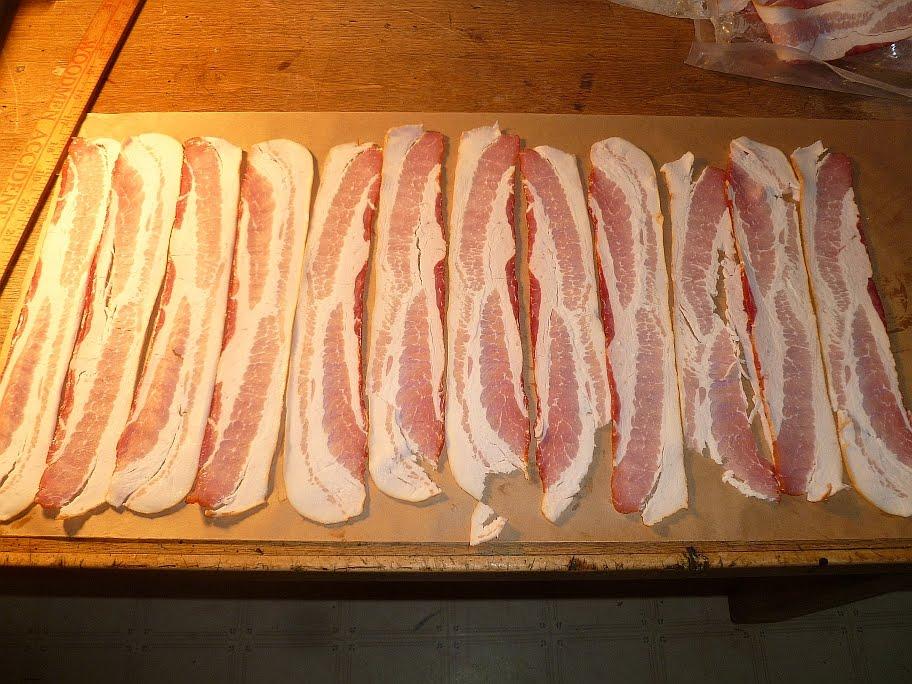
- Line the raw bacon out on the paper as close together as
possible, without overlapping. Depending on the thickness of your
bacon, you will fit between eight and sixteen slices of bacon on
this length of paper.
- Trim paper to the length of the bacon; don’t leave a paper tail.
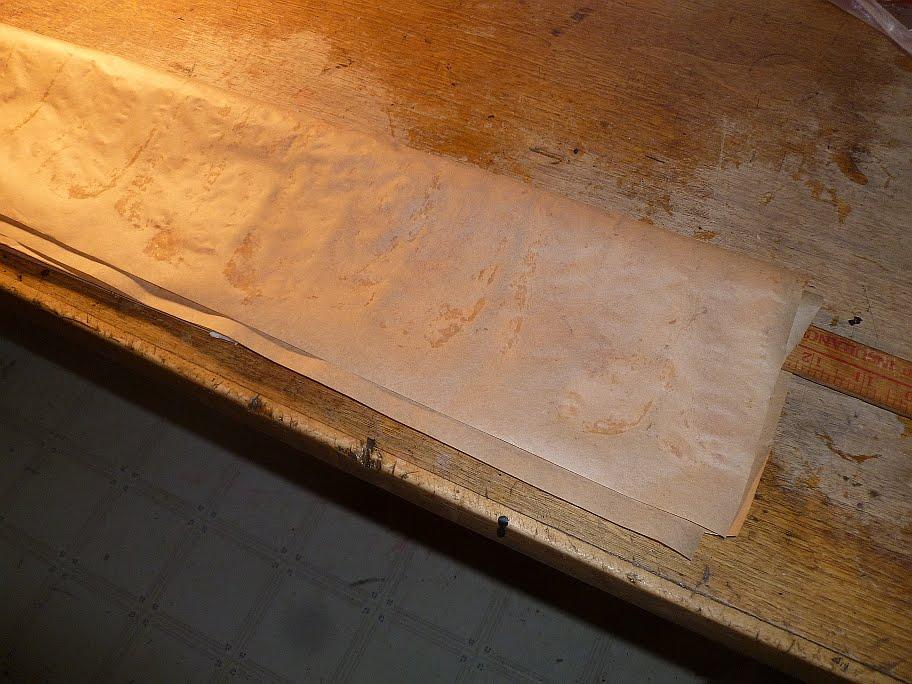
- Cover with another layer of paper the same length.
- Lay a yardstick on top of the bacon and paper layers to help
keep everything together, then fold the whole thing in half
lengthwise.
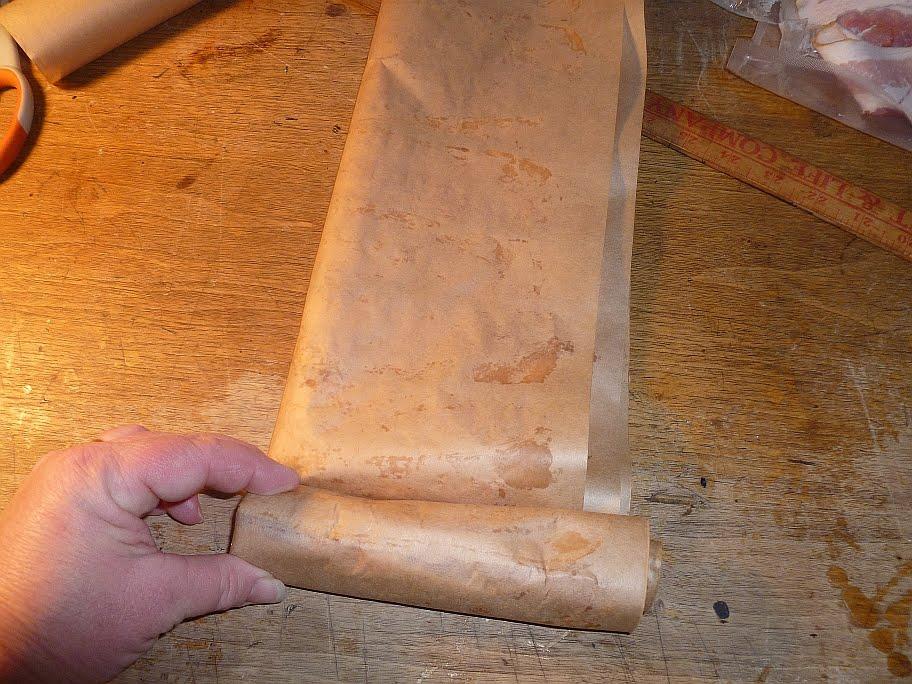
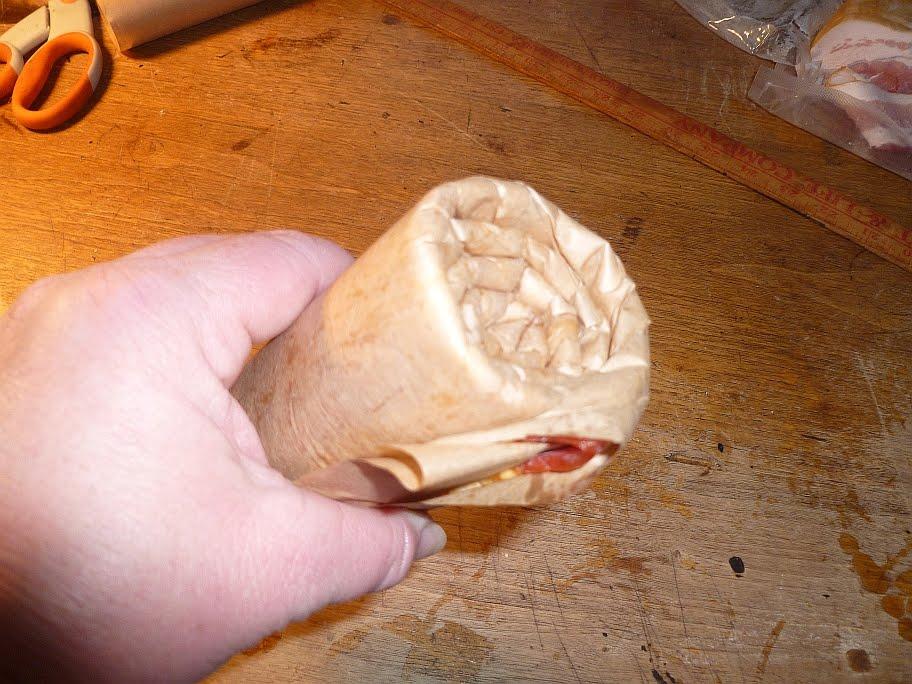
- Starting at narrow edge, tightly roll the rectangle of bacon and paper. You will need to tuck as you roll.
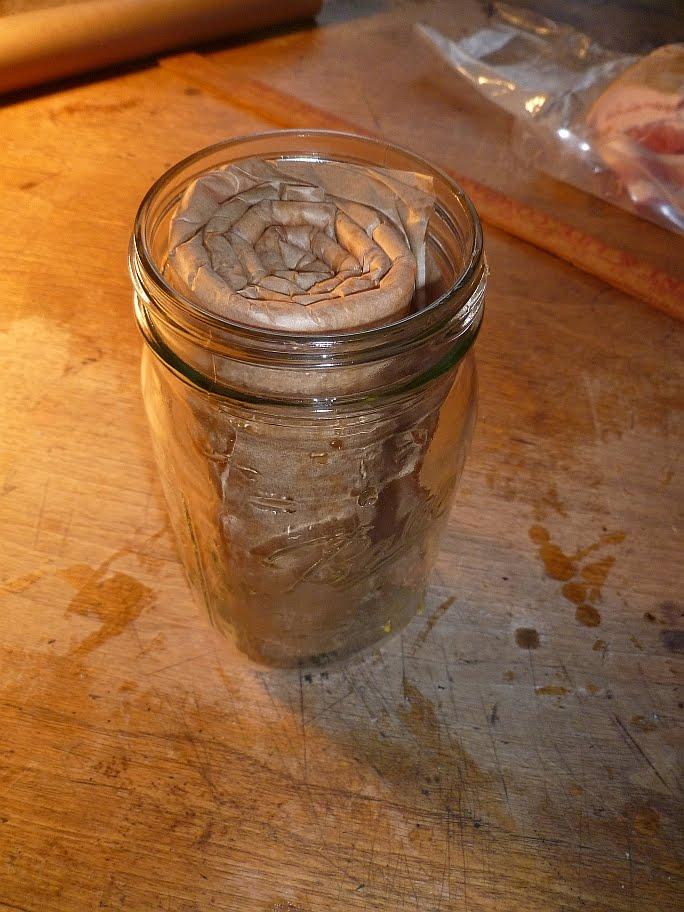
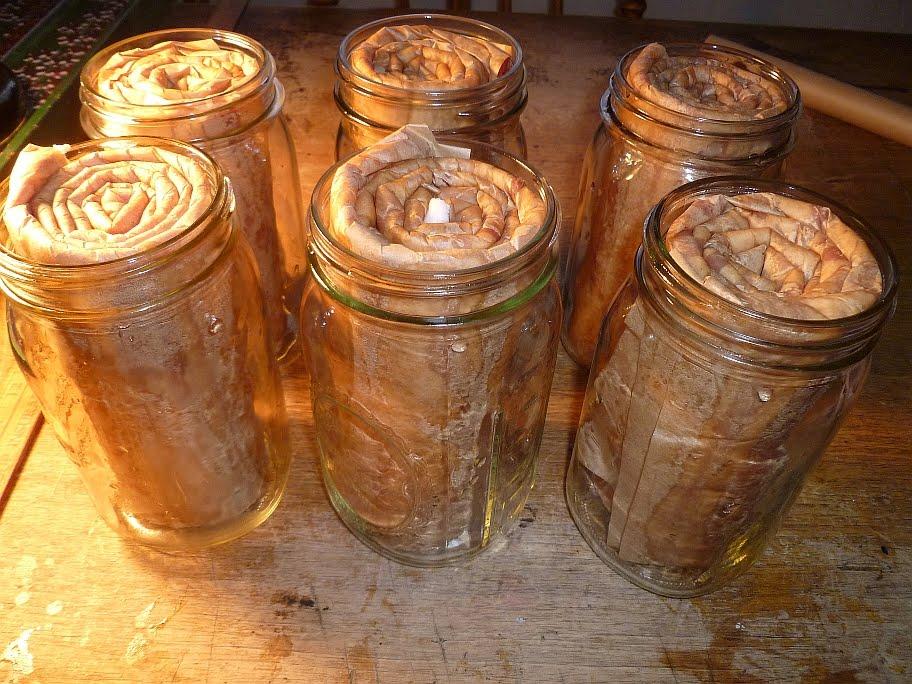
- Slide the roll into a wide-mouth quart jar. It may need to be
“screwed†in. If the roll won’t fit, unroll it just far enough to
remove one slice of bacon, then put it into the jar.
- Repeat for all the bacon. You will fill approximately one quart
per pound of bacon. There may be a few slices left over. Make some
bacon bits for a salad or baked potato bar.
- Place lids and rings on the jars. It may take a bit of
squishing to get them in place if the bacon sticks up above the jar
rim.
- Do NOT add water or any other liquid to the jars. Bacon is canned RAW and DRY.
- Put two to three inches of hot water in your pressure canner (or the amount specified by the manufacturer).
- Place jars in canner so that the steam can freely move around each jar.
- Place the lid on the canner and fasten it securely so that the steam escapes only through vent.
- Let the steam vent for ten minutes (or follow manufacturers
directions). This will allow all of the air to escape from the
canner. If it is not vented properly, you will have air pressure as
well as steam pressure and will get a faulty pressure reading.
- If you are using a dial gauge, close the petcock at this point.
If you’re using a weighted gauge, put the weight in place.
- With either type of gauge, follow the manufacturers
instructions for determining when ten pounds of pressure has been
reached.
- Process at ten pounds of pressure for ninety minutes.
- Follow manufacturers directions for cooling and opening the canner.
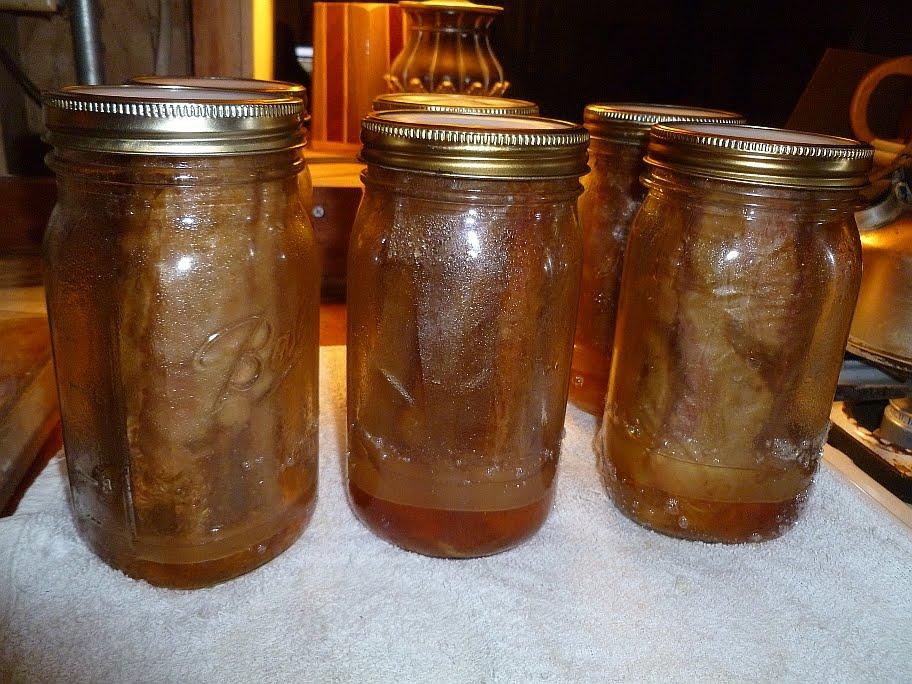
- When you take your jars from the canner, there will be about an
inch of liquid in the bottom of the jars. This is normal. When the
fat cools, it will turn white and be solid.
- Cool the jars and check the seals to be sure they have sealed
properly. Modern rings and lids are easily checked; slight pinging
sounds will be heard as the jars cool. This sound is your signal
that the vacuum seal has formed. The center of the lid will also
dip slightly. To check for that dip, try pushing the center of the
lid down; if it doesn’t push down, it is sealed. If the lid does push
down and springs back up, the jar is not sealed. If the lid is
dipped but pushes down and holds, the seal is questionable. If jars
leak when tested, they are not properly sealed. Remove lid
carefully and either reprocess with a new lid or use contents
immediately.
- If using anything other than modern rings and lids, read the
manufacturers instructions for the proper way to check your seals.
- Label and store in a cool, dry place. Shelf life is generally six to eight months, but up to a year is possible.
- To enjoy your preserved bacon, open jar and slide out bacon.
Unroll and spread open. The paper will be greasy and creased, but
it should not disintegrate. Peel the paper off the bacon (it will
be a bit messy, but it will peel away).
- When paper has been removed, just fry like normal. It cooks up really well.
Canning sausage works best with freshly made sausage.
- Cook sausage to brown lightly. It can be made into patties or broken up into crumbles. Brown patties on both sides.
- Fill jars with HOT sausage, leaving one inch of headspace.
- Pour 1-2 inches of HOT sausage grease into jars.
- Place lids and rings on jars tightly.
- Put two to three inches of hot water in your pressure canner (or the amount specified by the manufacturer).
- Place jars in canner so that the steam can freely move around each jar.
- Place the lid on the canner and fasten it securely so that the steam escapes only through vent.
- Let the steam vent for ten minutes (or follow manufacturers
directions). This will allow all of the air to escape from the
canner. If it is not vented properly, you will have air pressure as
well as steam pressure and will get a faulty pressure reading.
- If you are using a dial gauge, close the petcock at this point.
If you’re using a weighted gauge, put the weight in place.
- With either type of gauge, follow the manufacturers
instructions for determining when ten pounds of pressure has been
reached.
- Process at ten pounds of pressure – seventy-five minutes for pints or ninety minutes for quarts.
- Follow manufacturers directions for cooling and opening the canner.
- Cool the jars and check the seals to be sure they have sealed
properly. Modern rings and lids are easily checked; slight pinging
sounds will be heard as the jars cool. This sound is your signal
that the vacuum seal has formed. The center of the lid will also
dip slightly. To check for that dip, try pushing the center of the
lid down; if it doesn’t push down, it is sealed. If the lid does
push down and springs back up, the jar is not sealed. If the lid is
dipped but pushes down and holds, the seal is questionable. If
jars leak when tested, they are not properly sealed. Remove lid
carefully and either reprocess with a new lid or use contents
immediately.
- If using anything other than modern rings and lids, read the
manufacturers instructions for the proper way to check your seals.
- Label and store in a cool, dry place. Shelf life is generally six to eight months, but up to a year is possible.
- Be sure to heat to 170° F when reheating for your meal. Use the
grease it was packed in to make gravy or fry potatoes (or both) to go
with your meal.
The best I could find on the net since I have not attempted it yet... I have added this here since I have been asked a lot about the details although I have done a ton of research I still have not attempted it. This serves more as a place holder and guide for now. It will be replaced in the near future with my own methods and tests.
Last edited by a moderator: