

T
TasunkaWitko
Guest
when i began my research for this, i ran into a lot of crossover between french and belgian cuisine. this makes sense, for belgium is the bridge between the north-east region of france and north-west germany. wiki listed carbonnade de boeuf (beef stewed in beer) as a hallmark of the cuisine in the nord-pas-de-calais (artois, flanders, hainaut) and picardie regions. in belgium, the dish is called carbonade flamande. wiki's description is virtually an exact enumeration of the components for the french version:

since then, i have tried versions using white balsamic vinegar, white wine vinegar with a little brown sugar added, different beers, antelope rather than beef, etc. all have been very good, and the basic method is the same.
brown onions and set aside:

sear beef until well-browned and all moisture has been cooked out:
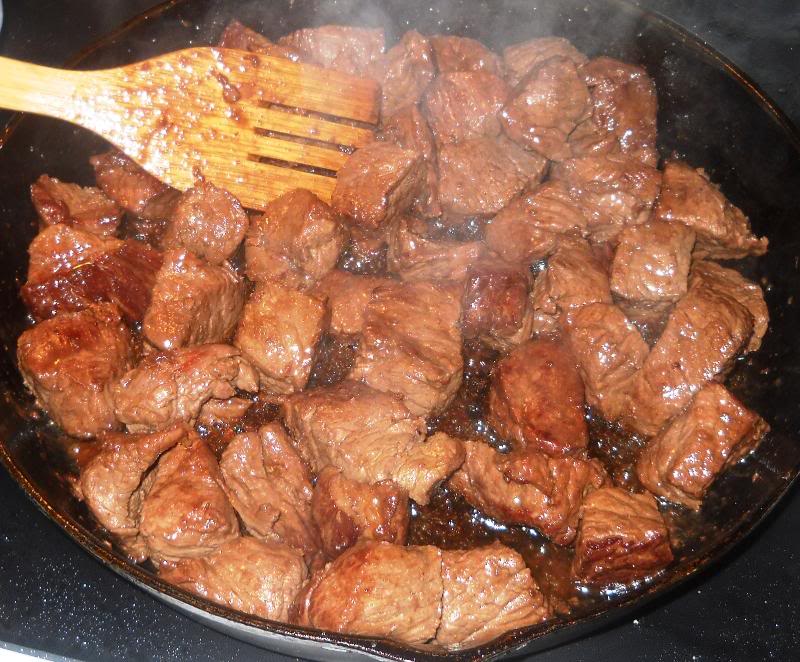
deglaze with wine or balsamic vinegar:
[Broken External Image]:http://i733.photobucket.com/albums/ww331/rivet/Beef/Carbonnade/7.jpg
layer beef and other ingredients between above and below the previously-carmelized onions:
[Broken External Image]:http://i733.photobucket.com/albums/ww331/rivet/Beef/Carbonnade/9.jpg
add beer as a braising liquid:
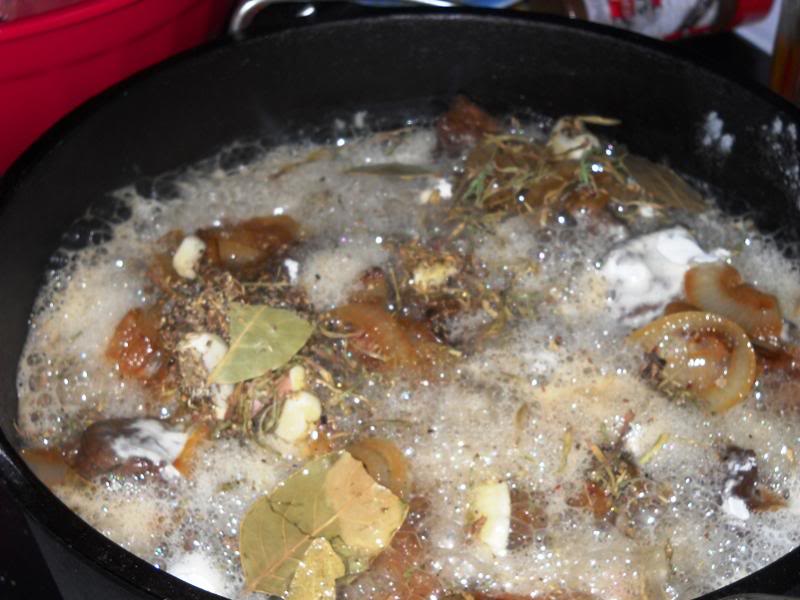
cover and braise low-and-slow in the oven until the meat is fall-apart tender:
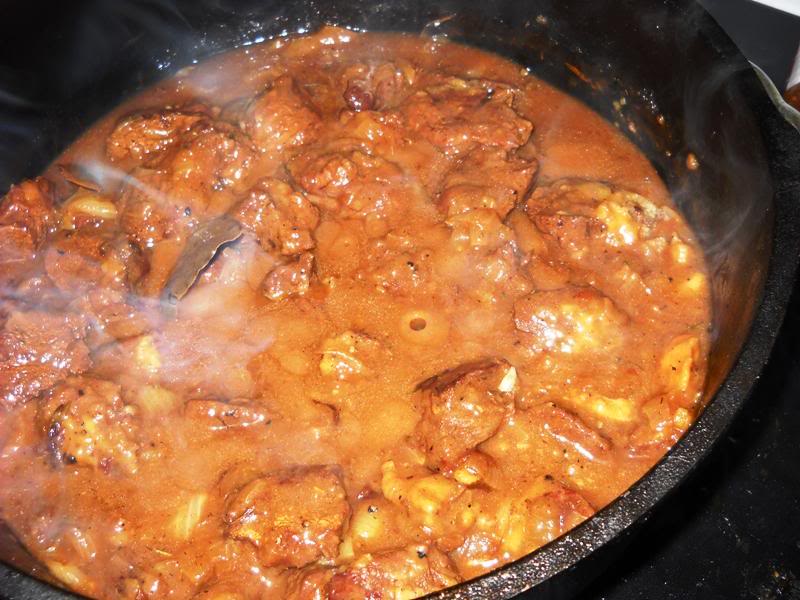
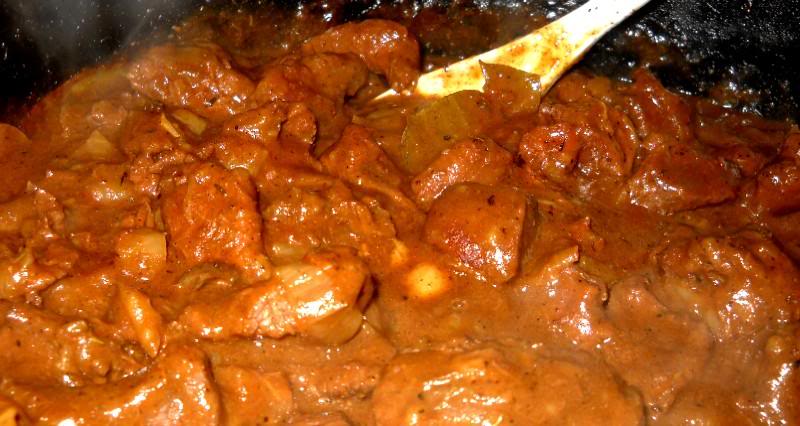
and the gravy makes a perfect sauce for the meat and whatever you serve it with (mashed or roasted potatoes seem to work best):
[Broken External Image]:http://i733.photobucket.com/albums/ww331/rivet/Beef/Carbonnade/CLOSEB.jpg

more details on the history and origins of this dish as well as preparation tips and results from people who have tried it can be found by following these links:
http://foodsoftheworld.activeb...du-buf_topic261.html
http://foodsoftheworld.activeb...amande_topic274.html
http://foodsoftheworld.activeb...bonade_topic572.html
this is regional peasant eating at its finest, and similar versions with only minor variations can be found all over europe. if anyone tries this, i'd love to hear about results.
here's the recipe:A carbonade flamande[1] (or à la flamande[2]), in Dutch Vlaamse Stoverij or Vlaamse stoofkarbonade, is a traditional Belgian sweet-sour beef and onion stew made with beer, and seasoned with thyme and bay.
The type of beer used is important, and traditionally an Oud bruin, Brune Abbey beer or Flanders red is the beer of choice with a somewhat bitter-sour flavour.[3] In addition to this and to enhance the sweet-sour flavour, just before serving, it has a small amount of cider or wine vinegar and either brown sugar or red currant jelly stirred in.[4][3]
It is often accompanied by frites or boiled potatoes.[5][3]
The term carbonade may also refer to a dish of grilled pork loin and certain beef stews cooked with red wine such as Beef bourguignon in the south of France[6], but is more commonly associated with the Belgian dish.
and here's the method. it's very easy to make with the simplest of ingredients:Carbonade Flamande
Ron’s Notes: This is a very old, very basic, farmers dish from the region where Belgium, France and Germany come together in northern Europe. It is plain, rustic fare that is in keeping with the people and their ways - farming, beer making, not much time for fuss and frivolity. Very simple, yet very good! You can make this entirely in a Dutch oven, or you can do all the prep work in other pans and then braise it in a Dutch oven or earthenware crock.
You Will Need:
Butter and/or extra virgin olive oil for frying
4 to 5 large onions
3 to 4 pounds beef chuck, bottom round or other cheap cut of beef
1/2 cup flour
2/3 cup red wine vinegar
6 to 10 cloves garlic
1 tbsp dried thyme, or 2 tbsp fresh thyme
4 to 5 bay leaves
3 to 4 beef bullion cubes, to taste
Sea salt and Freshly-ground black pepper, to taste
2 bottles Belgian-style beer
Prep Work: Pre-heat oven to 325 degrees. Slice onions thickly (perhaps 1/2 inch) into disks. Trim of most of the fat from beef and cut into approximately 3-inch by 2-inch chunks. Measure out flour into a bowl or cup. Pour 2/3 cup of red wine vinegar into a bowl or cup and de-cap beer bottles. Crush and peel garlic cloves and put them into a bowl with the thyme, bay leaves, bullion cubes, salt and pepper. Heat 3 to 4 tablespoons butter and/or olive oil in a wide skillet or sauté pan to high, but back off a bit of it starts to burn. Alternately, this recipe can be made entirely within a cast-iron Dutch oven.
Summary: Toss onions into pan and sprinkle a bit of salt on them to help release moisture. Sauté until slightly-browned and caramelized on both sides; if the disks come apart into rings, don't worry, but try to keep them whole. Remove from heat and place half of the onions in the bottom of an earthenware crock, reserving the remainder. If using Dutch oven, simply put the onions in another container and set aside for now.
Add a bit more butter and/or olive oil to the pan. When hot, add meat and sear on all sides, it will take some time to cook the moisture down; stick with it! Just when you are about to give up, the real majority of the moisture will get cooked out and the meat will get well-browned on all sides. Place meat on top of the bottom layer of onions and sprinkle the flour over the meat. If using Dutch oven, put meat in a container and set aside for now.
De-glaze the pan or Dutch oven with the red wine vinegar, stirring well to lift all the brown bits from the pan. When the vinegar has reduced down to a thick, caramelized liquid, drizzle it over the beef in the crock. If using Dutch oven, remove from heat, place half the onions on the bottom and stir them around to mix with the deglazed liquid, then place meat on top of the onions. Sprinkle the flour over all, along with the garlic, thyme, bay leaves, bullion cubes, salt and pepper. Spread remaining onions on top and pour in the two bottles of beer.
Cover crock or Dutch oven and place in oven at 325 degrees for half an hour, then reduce heat to 300 degrees for two-and-a-half hours.
Remove from the oven and remove the cover. Sauce should thicken while standing. If necessary, heat uncovered until it thickens to desired consistency. Carbonade Flamande should be thick and rich, like a stew or gravy. Serve with potatoes cooked your favorite way and your favorite vegetable. Don’t forget to have some sliced, crusty warm bread for sopping up the sauce!
since then, i have tried versions using white balsamic vinegar, white wine vinegar with a little brown sugar added, different beers, antelope rather than beef, etc. all have been very good, and the basic method is the same.
brown onions and set aside:
sear beef until well-browned and all moisture has been cooked out:
deglaze with wine or balsamic vinegar:
[Broken External Image]:http://i733.photobucket.com/albums/ww331/rivet/Beef/Carbonnade/7.jpg
layer beef and other ingredients between above and below the previously-carmelized onions:
[Broken External Image]:http://i733.photobucket.com/albums/ww331/rivet/Beef/Carbonnade/9.jpg
add beer as a braising liquid:
cover and braise low-and-slow in the oven until the meat is fall-apart tender:
and the gravy makes a perfect sauce for the meat and whatever you serve it with (mashed or roasted potatoes seem to work best):
[Broken External Image]:http://i733.photobucket.com/albums/ww331/rivet/Beef/Carbonnade/CLOSEB.jpg
more details on the history and origins of this dish as well as preparation tips and results from people who have tried it can be found by following these links:
http://foodsoftheworld.activeb...du-buf_topic261.html
http://foodsoftheworld.activeb...amande_topic274.html
http://foodsoftheworld.activeb...bonade_topic572.html
this is regional peasant eating at its finest, and similar versions with only minor variations can be found all over europe. if anyone tries this, i'd love to hear about results.
 oints1: